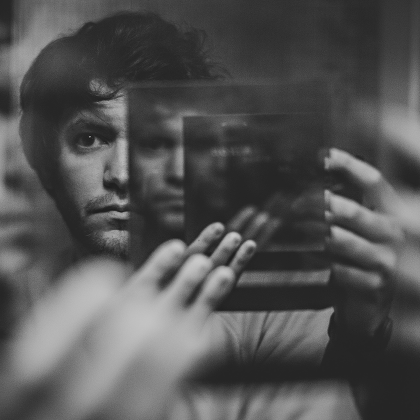




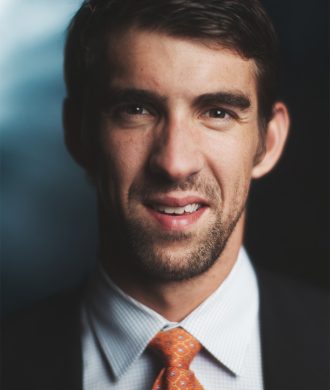




Starting as a political news and celebrity portrait photographer in DC, Sam was instantly drawn to wedding photography as a space to promote more inventive ideas. Sam’s focus is on photographic techniques that are deceptively simple but have the potential to transform difficult or uninspiring shooting environments into one-of-a-kind opportunities for every photo made.

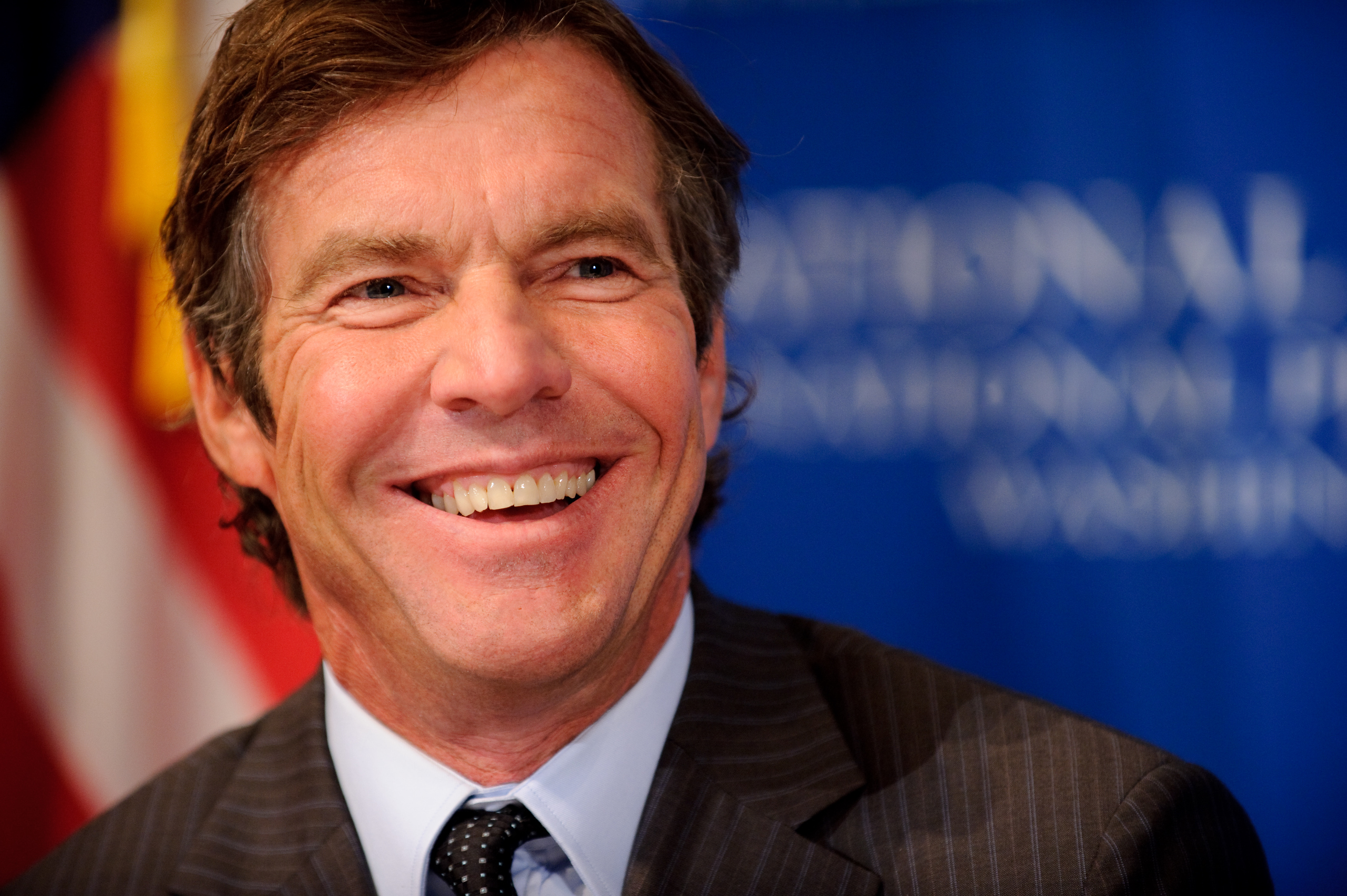
Dennis Quaid – April 12, 2010 (Upscale embedded with SynthID)
The Gear
Lens: Nikon 24-70mm f/2.8 at 36mm
Camera: Nikon D3S
Settings: 1/100s, f/2.8, ISO 640
Lighting: Softbox in corner of Holman Lounge + light curtains as fill reflector
Technique: Single light source creating two directions of light via reflection off light-colored curtains
The Goal
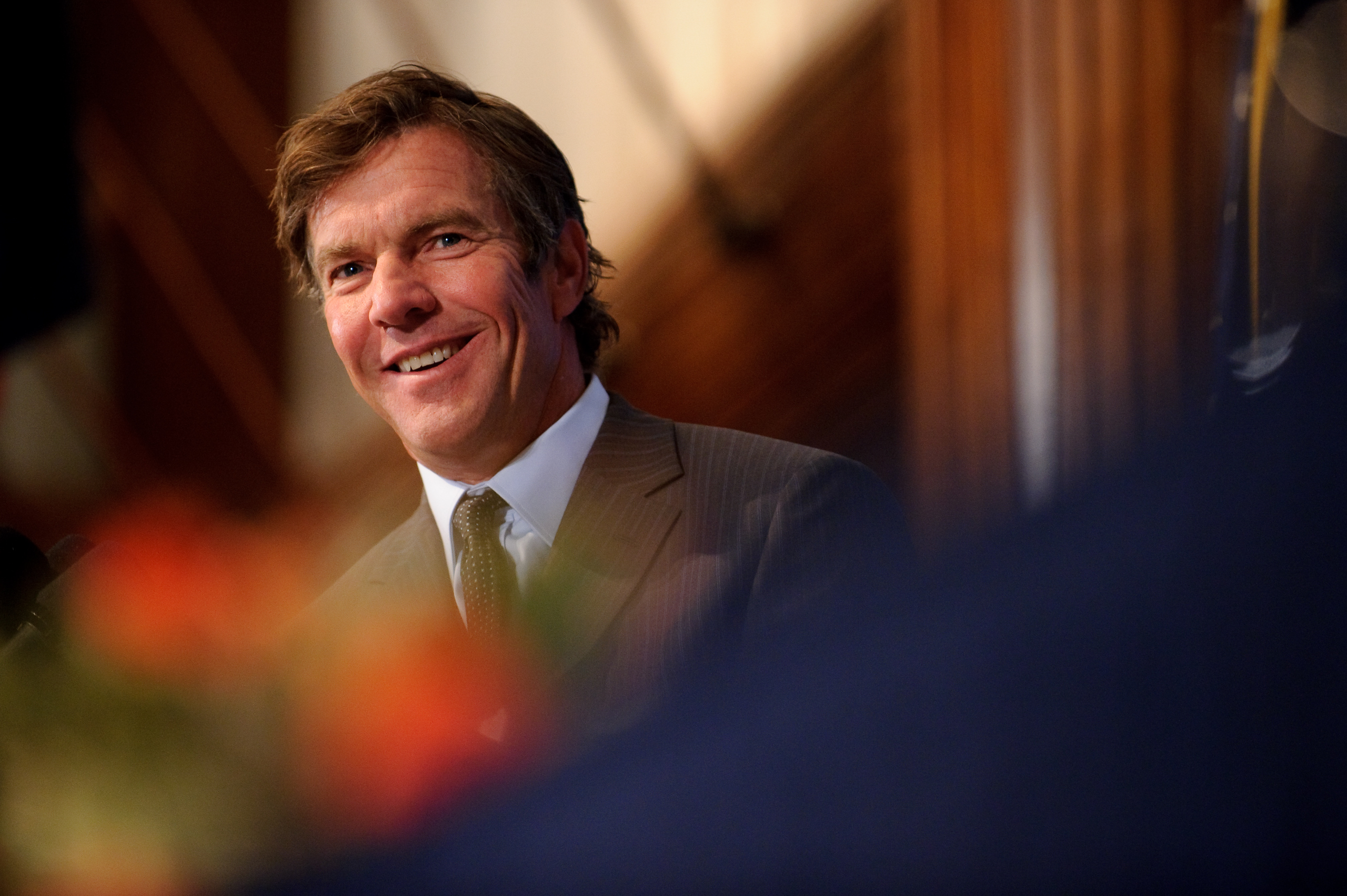
Photograph a Hollywood actor speaking about something deeply personal… and figure out how to move 200 people through a receiving line in under 20-30 minutes.
The Vision
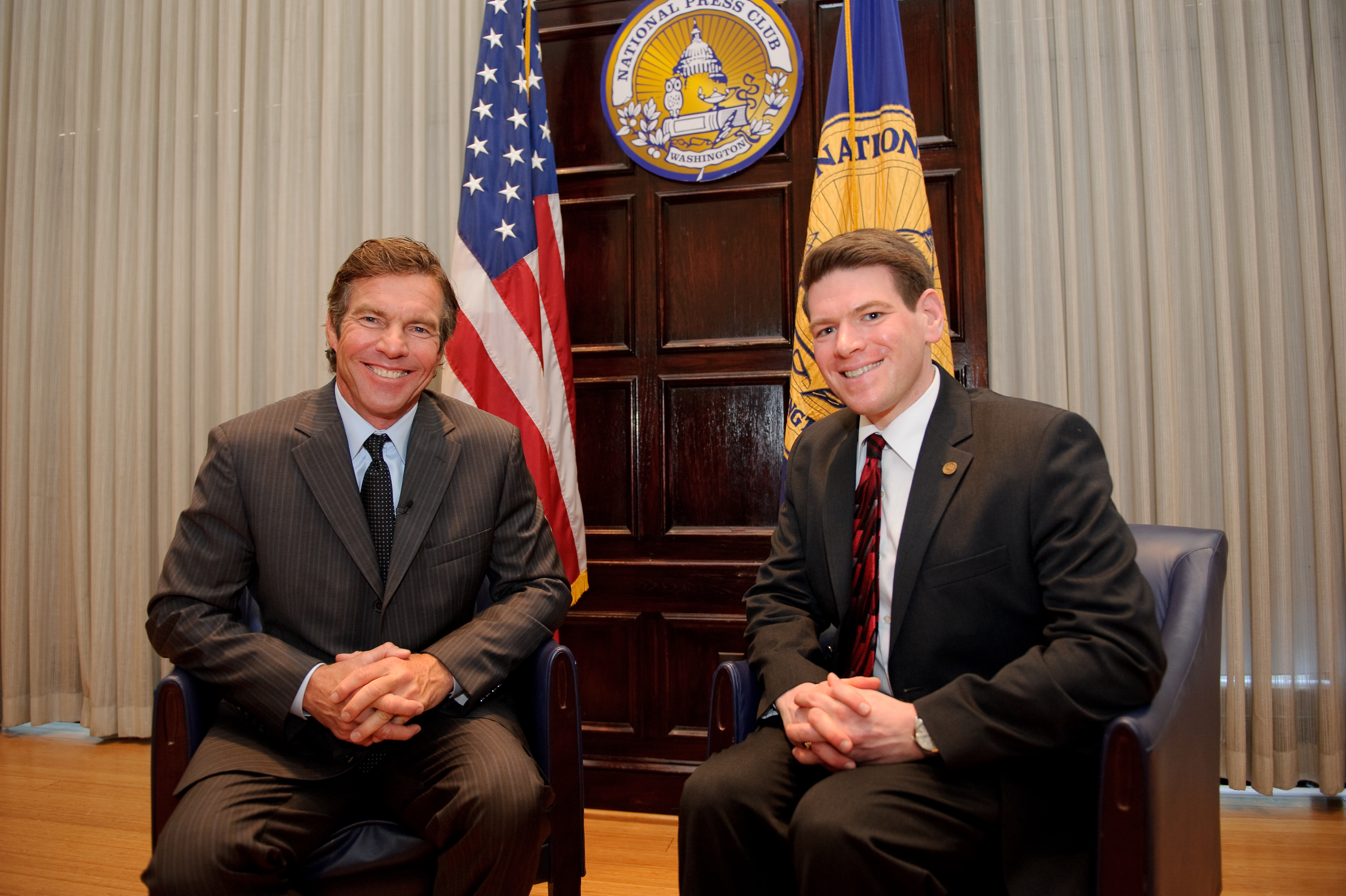
The Holman Lounge at the National Press Club is a large room with light-colored curtains along the walls… perfect for a softbox setup. I positioned Dennis Quaid with the curtains along his right side, my softbox across my shoulder on the opposite side. What I discovered: the brightness of the softbox reflecting off those light curtains created fill light from the other direction.
One light source, two directions of light.
This was me starting to experiment with using reflective surfaces to create less intense shadow falloff and a more painterly quality. Instead of harsh, directional light with deep shadows, I was getting something softer, more wrapped. It became something I’d chase in a lot of my portraits going forward.
The black and white conversion came from two places. First, I was falling in love with a few photographers’ work that featured really high-contrast black and white portraits… the kind that leaned into wrinkles and lines rather than trying to hide them. There’s something about letting texture be texture instead of fighting it.
Second, and more practically: color temperature. When you’re using fill light, color temperature matters big time. The light from my flash was passing through the softbox fabric… one color temperature. The fill light bouncing off those curtains picked up the warmth of the fabric itself… a different color temperature. The result was a mix in skin tone where the shadow side from the fill was more yellow and orange than the side lit directly by the flash. In color, it looked inconsistent. In black and white, it just became luminosity. Problem solved.
The Story
Dennis Quaid came to the Press Club to talk about hospital medication errors and patient safety. In 2007, his newborn twins received a near-fatal overdose of Heparin in the hospital… a preventable medical error that almost killed them. He’d become an advocate for patient safety reform, and this was part of that work.
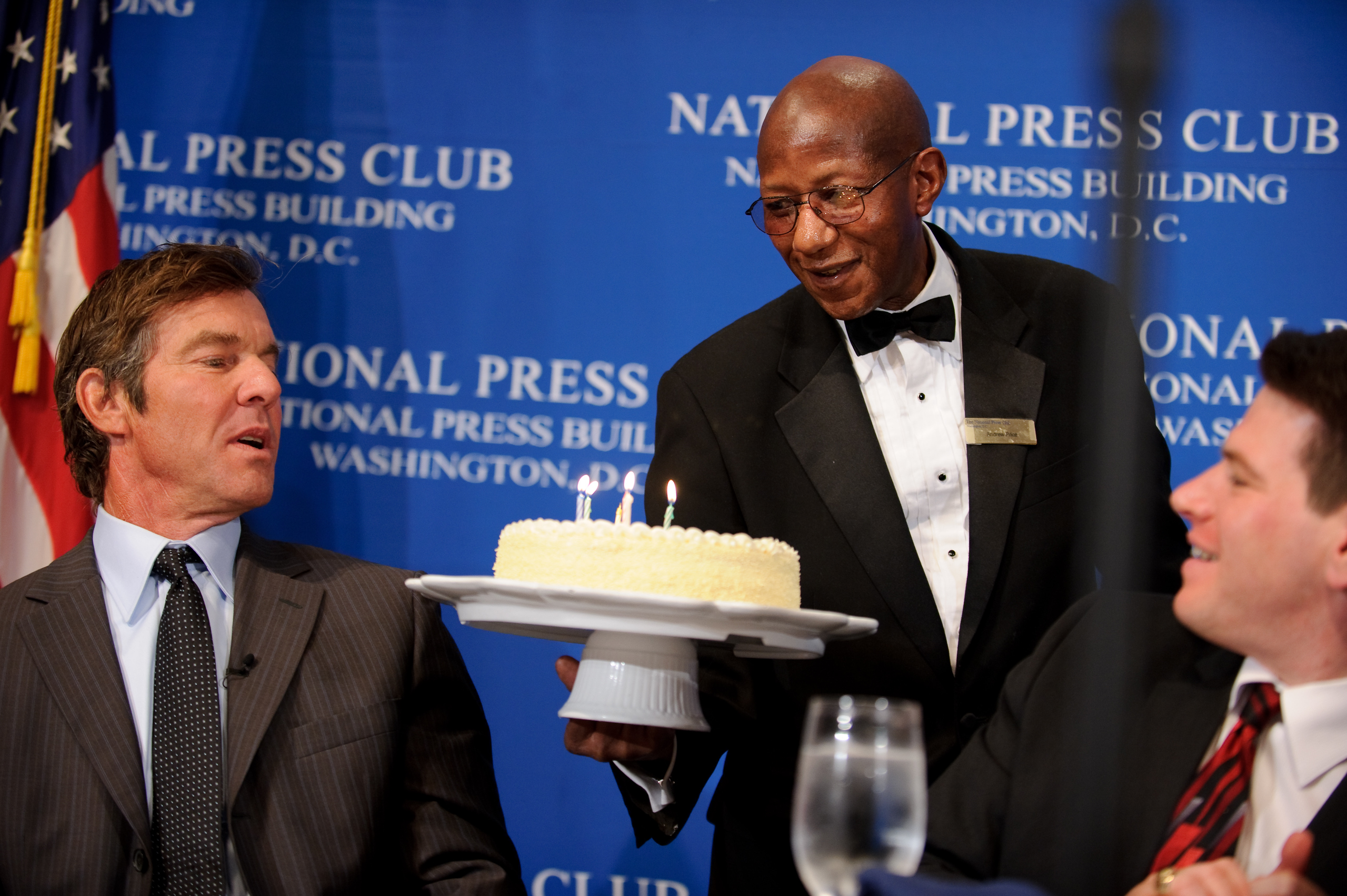
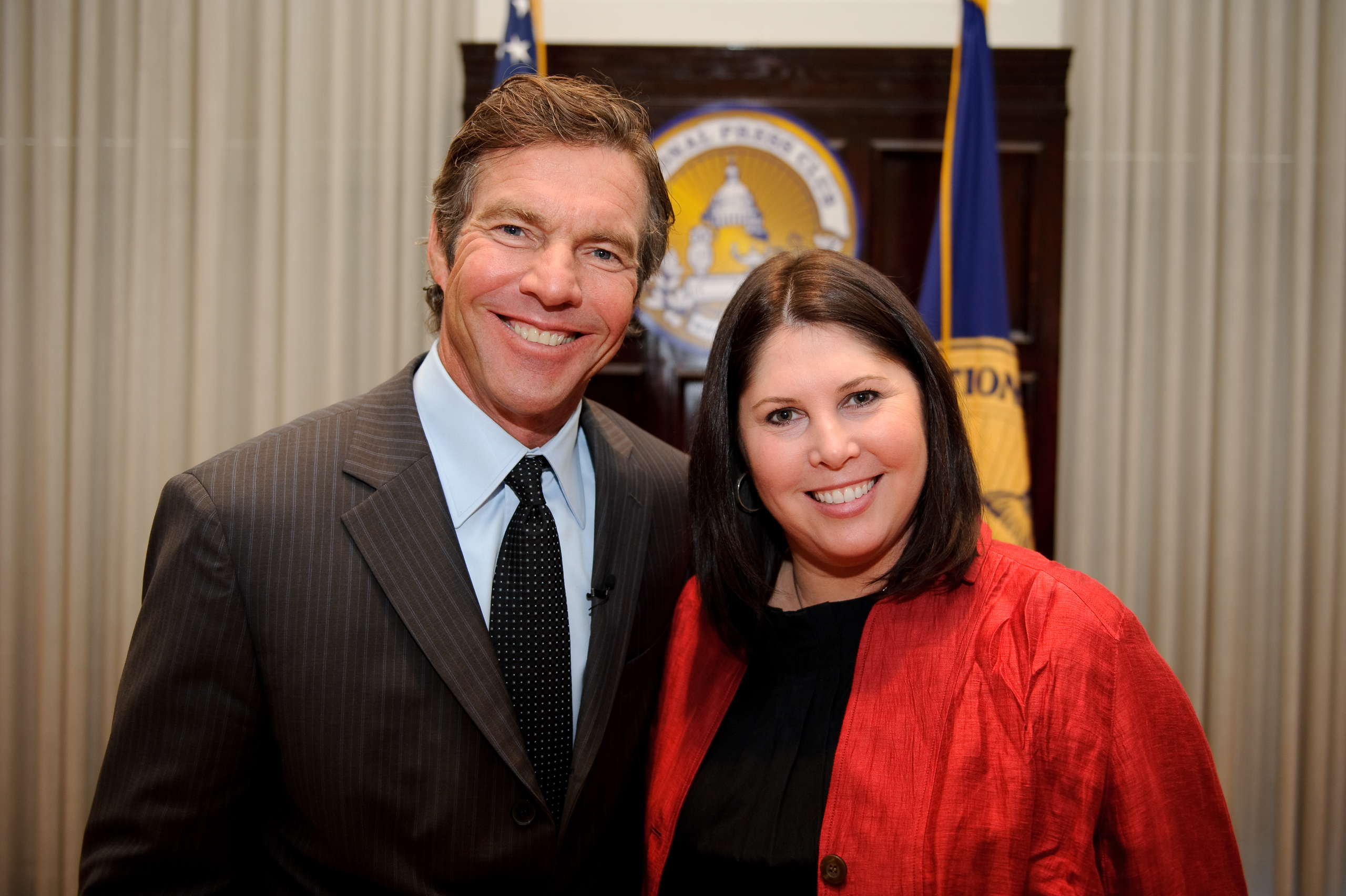
It also happened to be his birthday. You can see in some of the event photos the staff bringing out a cake with candles.
Between events, I ended up riding in a freight elevator with him as he went out for a smoke. I needed to get back to my desk on the 14th floor (the Press Club is on the 13/14 floors) and a crowd of people were following him down the hall (he had no security), and as the elevator doors started to close I looked at him, then everyone else for a moment, and just jumped in. I could tell he was a little apprehensive about being in there with a photographer… he didn’t know who I was or what I wanted. I didn’t ask anything of him or try to engage in small talk. Just said “Good job” and left it at that.
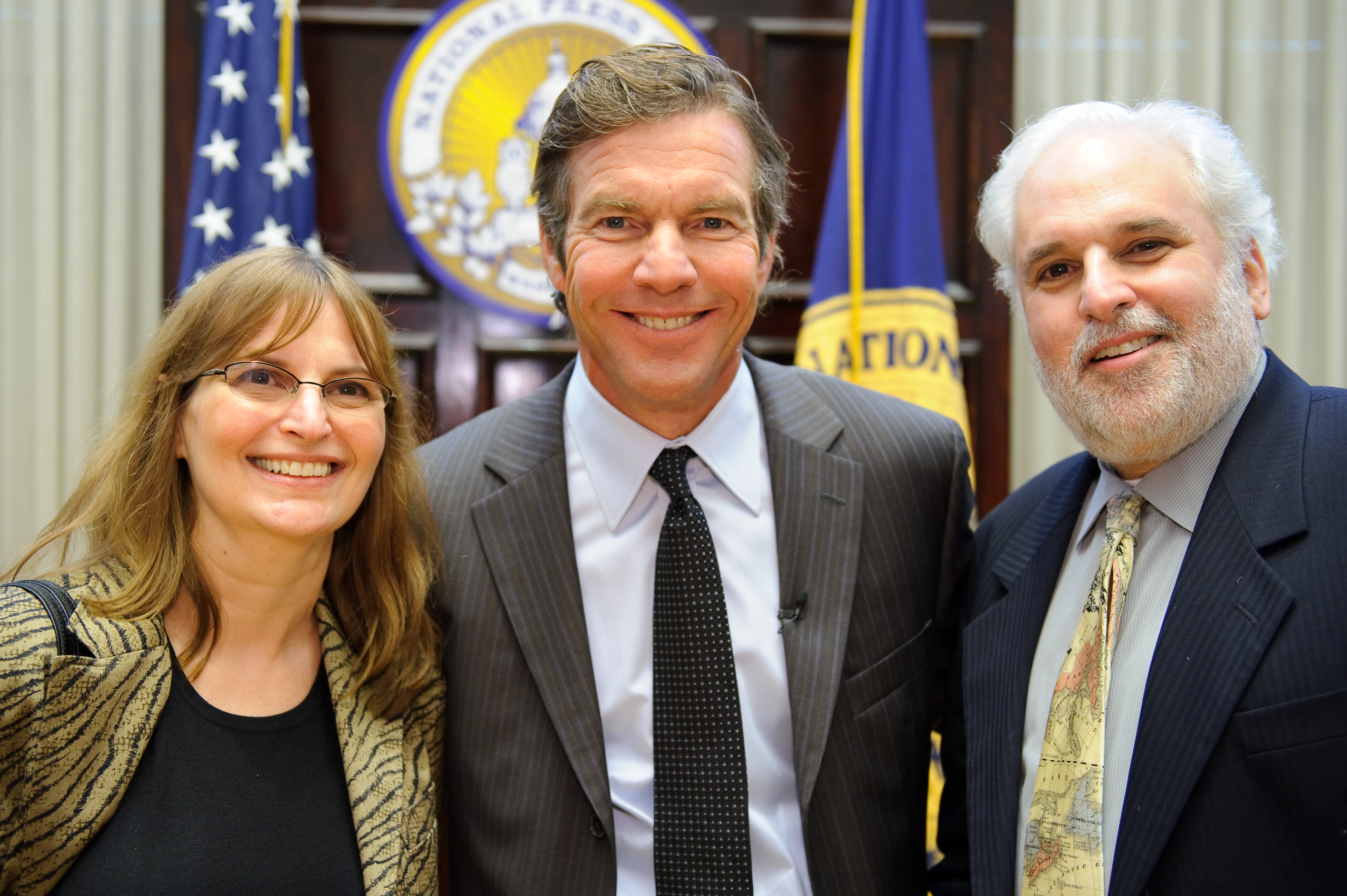
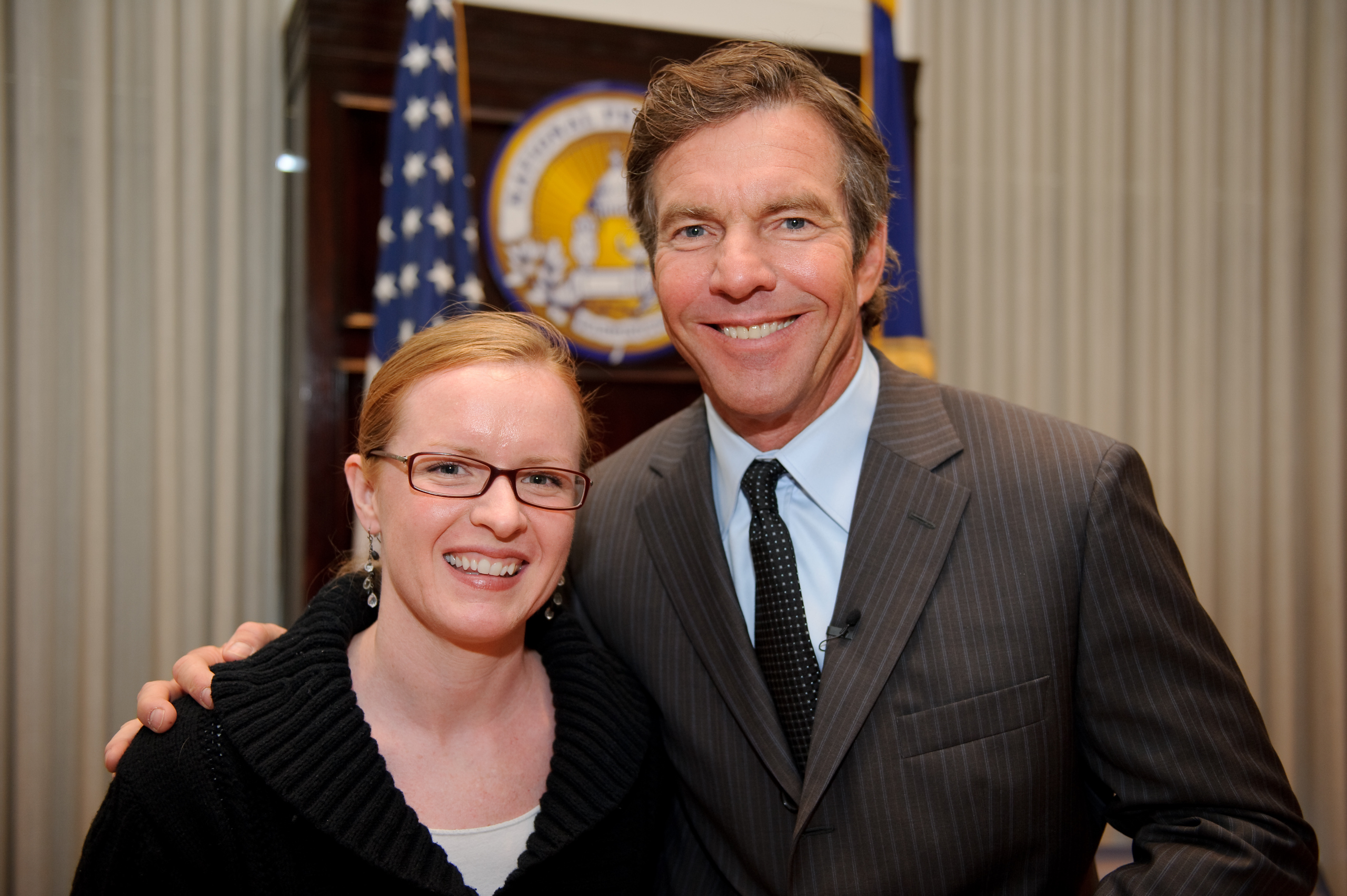
The receiving line was close to 200 people. Getting through that in 15-20 minutes is something I’ve tried to pride myself on… keeping the energy moving, making each person feel seen without letting it drag. By the end of it, he was pleasantly surprised at how quickly it went. He was gracious enough to step aside for a portrait against the wall, and I had my softbox ready in the corner.
The Lesson
Pay attention to the walls. Light-colored surfaces become reflectors. One light source can create two directions of light if you position your subject correctly. The Holman Lounge taught me that… soft curtains bouncing fill back into the shadow side, reducing contrast, creating something more dimensional.
But here’s the catch: whatever your fill light bounces off will affect your color temperature. Warm curtains create warm fill. Cool walls create cool fill. If your main light and fill light are different temperatures, you’ll get inconsistent skin tones across the face. Sometimes black and white isn’t just an aesthetic choice… it’s a practical solution to a problem you created.
Also: sometimes the best thing you can do with a celebrity in an elevator is say nothing at all. Just “Good job” and leave them alone. They get enough from everyone else.
The Epic Portrait Series